Activities
Successful Webinar Explores Employment Models and Immigration in Pakistan, Brazil, and Italy
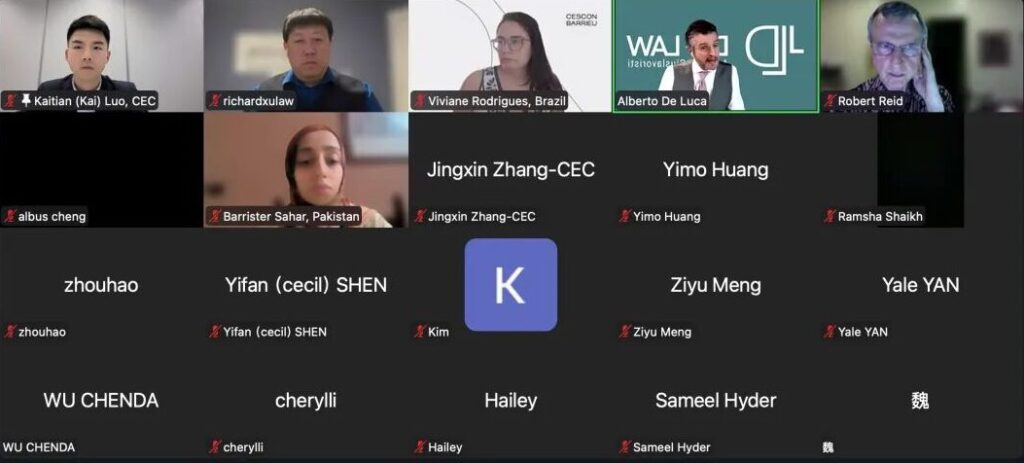
On January 14, 2026, Cross-border Employment Compliance (CEC) and Anli Partners co-hosted the inaugural webinar in the Cross-border Employment Compliance series, with support from Wolters Kluwer. The session focused on “Employment Models and Immigration,” bringing together leading employment lawyers from Pakistan, Brazil, and Italy to share insights on the topic, recent legislative developments, and practical experience in their respective jurisdictions. The webinar was moderated by Dr. Luo Kaitian, Editor-in-Chief of Cross-border Employment Compliance (CEC), a partner at Anli Partners, and Head of Employment Law & ESG Practices.
Dr. Luo Kaitian opened the webinar by briefly introducing the speakers and outlining changes in the global employment landscape. He noted that, as a new phase of globalization unfolds and supply chain regulation and ESG requirements develop rapidly, cross-border employment and immigration are becoming a systemic challenge spanning business, law, and security, extending well beyond traditional contract management.
Sahar Iqbal, a partner at Akhund Forbes in Pakistan, was the first speaker. A leading lawyer recognized by Chambers and Partners and The Legal 500, she is also a member of the Women’s Standing Committee of the Federation of Pakistan Chambers of Commerce and Industry. She explained that Pakistan’s labor laws generally favor employee protection, while the coexistence of federal and provincial laws can create uncertainty over worker classification and dispute resolution. In practice, even where a company classifies an individual as a consultant or independent contractor, courts may find that an employment relationship exists based on the company’s actual management practices and the individual’s degree of subordination. She therefore advised Chinese companies hiring foreign nationals to carefully assess which labor laws apply and the potential risks of having to comply with requirements in more than one jurisdiction.
Viviane de Azevedo Rodrigues, a partner at Cescon Barrieu in Brazil and a specialist in employment law and ESG, then drew on her extensive experience to examine recent developments in Brazilian labor law. She noted that the full rollout of the eSocial digital reporting system has closely integrated employment, tax, and social security data, significantly raising expectations for compliance transparency. A proposed constitutional amendment introducing a 36-hour workweek could also have far-reaching implications for labor costs and workforce scheduling. She further observed that Brazilian courts are increasingly exploring hybrid classifications for platform workers, signaling tighter scrutiny of the boundaries of employment relationships.
Alberto De Luca, founding partner of DL Law in Italy, Co-Chair of the Employment and Immigration Law Committee of the Inter-Pacific Bar Association (IPBA), and a leading lawyer recognized by Chambers and Partners, then offered a European perspective on the core features of employment compliance in Italy. He emphasized the central role of collective agreements, which establish clear minimum standards for pay, benefits, and dismissal conditions. As remote work becomes more widespread, employers’ responsibilities for employee health and safety continue to expand. The use of AI and employee monitoring is also subject to strict privacy scrutiny, with demanding compliance requirements that apply even where employees have given their consent.
During the discussion, all three speakers emphasized that, despite significant differences between national legal systems, courts generally apply a “substance over form” approach when determining whether an employment relationship exists. Improper use of independent contractors or flexible work arrangements can lead to reclassification as employment, potentially giving rise to additional tax, social security, and other liabilities.
The speakers concluded by advising Chinese companies expanding overseas to tailor their workforce arrangements to each country’s legal framework, maintain and regularly update their employment compliance systems, and integrate employment compliance into their broader ESG and risk management frameworks to address an increasingly complex global regulatory environment.
The webinar attracted more than 40 registrations from across sectors and received positive feedback from all attendees.