
Activities
Successful Webinar Explores Trade Secrets and Non-Compete Restrictions in Iran, Vietnam, and Pakistan
On March 31, 2026, Cross-border Employment Compliance (CEC) and Anli Partners co-hosted the fifth webinar in the Cross-border Employment Compliance series, with support from LexisNexis. The session focused on trade secrets and non-compete restrictions, frequent sources of disputes in cross-border employment relationships. It examined how the relevant rules apply across jurisdictions, the challenges of enforcement, and practical approaches to compliance.
The webinar brought together experienced employment law specialists from Iran, Vietnam, and Pakistan. Drawing on judicial practice and the regulatory environment in their respective jurisdictions, the speakers compared how different legal systems treat non-compete restrictions and confidentiality obligations, and highlighted practical compliance considerations for companies navigating cross-border employment. The session was moderated by Dr. Luo Kaitian, Editor-in-Chief of Cross-border Employment Compliance (CEC), a partner at Anli Partners, and Head of Employment Law & ESG Practices.
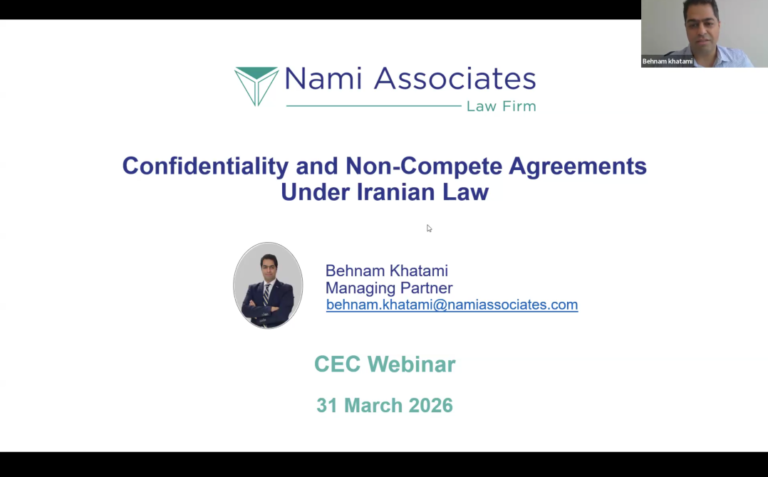
Behnam Khatami, Managing Partner of Nami Associates in Iran, opened with an overview of local practice. He explained that while confidentiality clauses are not legally required in Iran, they are widely used and can be enforceable. Their protection is not absolute, however, so companies should clearly define confidential information and specify the consequences of a breach. The legal framework for non-compete clauses is less clear, and judicial approaches vary. Such clauses may be found invalid if they unduly restrict a worker’s ability to earn a living. He therefore advised companies to make confidentiality provisions their primary safeguard, supported by non-solicitation arrangements and internal information controls.
Dinh Quang Thuan, a partner at Global Vietnam Lawyers, then discussed Vietnam’s approach to non-compete and confidentiality arrangements. He noted that Vietnamese law does not expressly establish a standalone non-compete regime, and that restrictions incorporated into confidentiality agreements are more likely to be upheld. He also emphasized the need to provide reasonable compensation to employees subject to such restrictions; otherwise, the provisions may be found invalid. In resolving disputes, arbitration can offer greater flexibility and more effective enforcement than litigation in practice.
Sahar Iqbal, a partner at Akhund Forbes in Pakistan, then outlined the country’s strict regulatory approach to non-compete provisions. She explained that, under the Competition Act, 2010, an agreement containing such a provision may be void in its entirety if it falls within the Act’s prohibition and has not received an exemption. Companies considering these arrangements should assess whether they need to apply to the Competition Commission of Pakistan for an exemption in advance. Although the procedure is relatively clear, the regulator has substantial enforcement powers, making careful assessment essential.
Overall, the webinar highlighted significant differences in how jurisdictions approach non-compete and confidentiality clauses. Some place greater weight on workers’ freedom to pursue employment, while others regulate restrictive arrangements through competition law or approval procedures.The experts advised Chinese companies expanding internationally to assess the legal environment in each target market rather than simply applying familiar practices. Companies should define rights and obligations clearly in their contracts and support those terms with internal controls, including access restrictions for sensitive information. In jurisdictions with stringent regulation, they should pay particular attention to approval and filing requirements.
Dozens of representatives from corporate legal and human resources teams and professional organizations attended the webinar. The discussion was substantive and drew positive feedback. The next webinar in the Cross-border Employment Compliance series will continue to explore emerging issues. Stay tuned.